

Home / Trends / Newsroom / Article
Taiwan Excellence Has a New Pitch for America: Become Part of the Team
In Texas, Taiwan Excellence arrived with a familiar American language: baseball.
But the real pitch was about something much bigger.
At the Taiwan Excellence Pavilion at Taiwan Expo USA 2025 in Dallas, 24 Taiwanese companies presented 69 products spanning artificial intelligence, advanced manufacturing, health care, consumer technology and more. The exhibition was designed not simply to showcase what Taiwan makes, but to demonstrate how Taiwan could fit into the next chapter of the American economy.
The distinction matters.
For decades, Taiwan’s relationship with the United States has been closely associated with trade and supply chains. Taiwanese companies have supplied components, electronics and technologies that underpin American industries, often without the broader public knowing where those capabilities came from.
Taiwan Excellence is trying to change that equation.
Its Dallas pavilion offered a more visible proposition: Taiwan is not only a supplier. It can be a partner — in technology, investment, innovation and, increasingly, in the communities where those relationships are built.
A Baseball Game With a Business Agenda
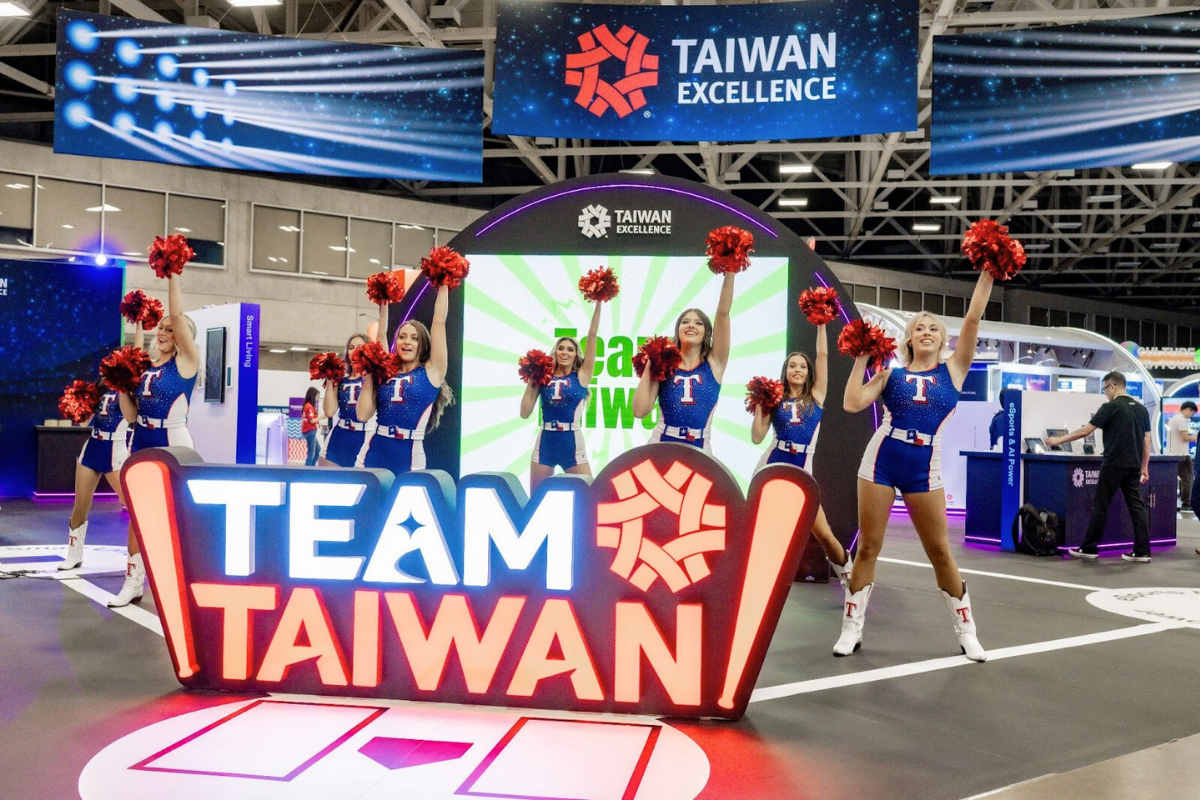
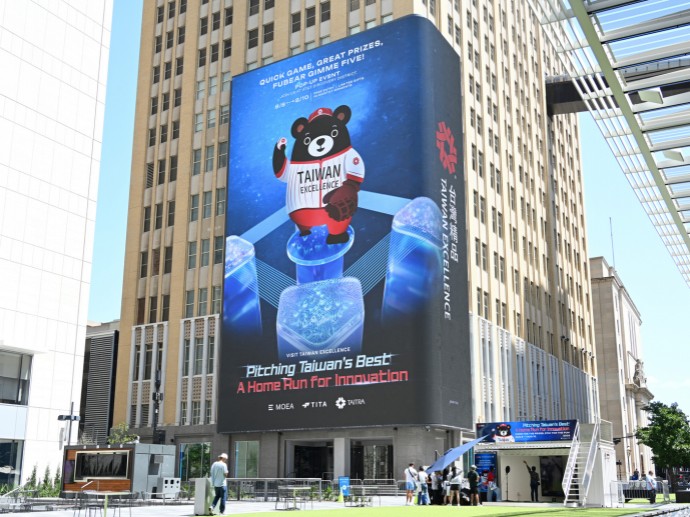
The pavilion’s theme, “Pitching Taiwan’s Best, a Home Run for Innovation,” was designed around one of Texas’s most recognizable cultural institutions.
FuBear, the Taiwan Excellence mascot, appeared as a baseball pitcher. The pavilion itself took the form of an “interstellar baseball stadium,” combining references to Texas’s aerospace and technology industries with the sport that dominates the state’s cultural landscape.
The symbolism was deliberate.
Baseball provided a common language between Taiwan and Texas: teamwork, strategy, discipline and the pursuit of a win.
But Taiwan Excellence went further than borrowing the language of the game. It brought Texas into the story.
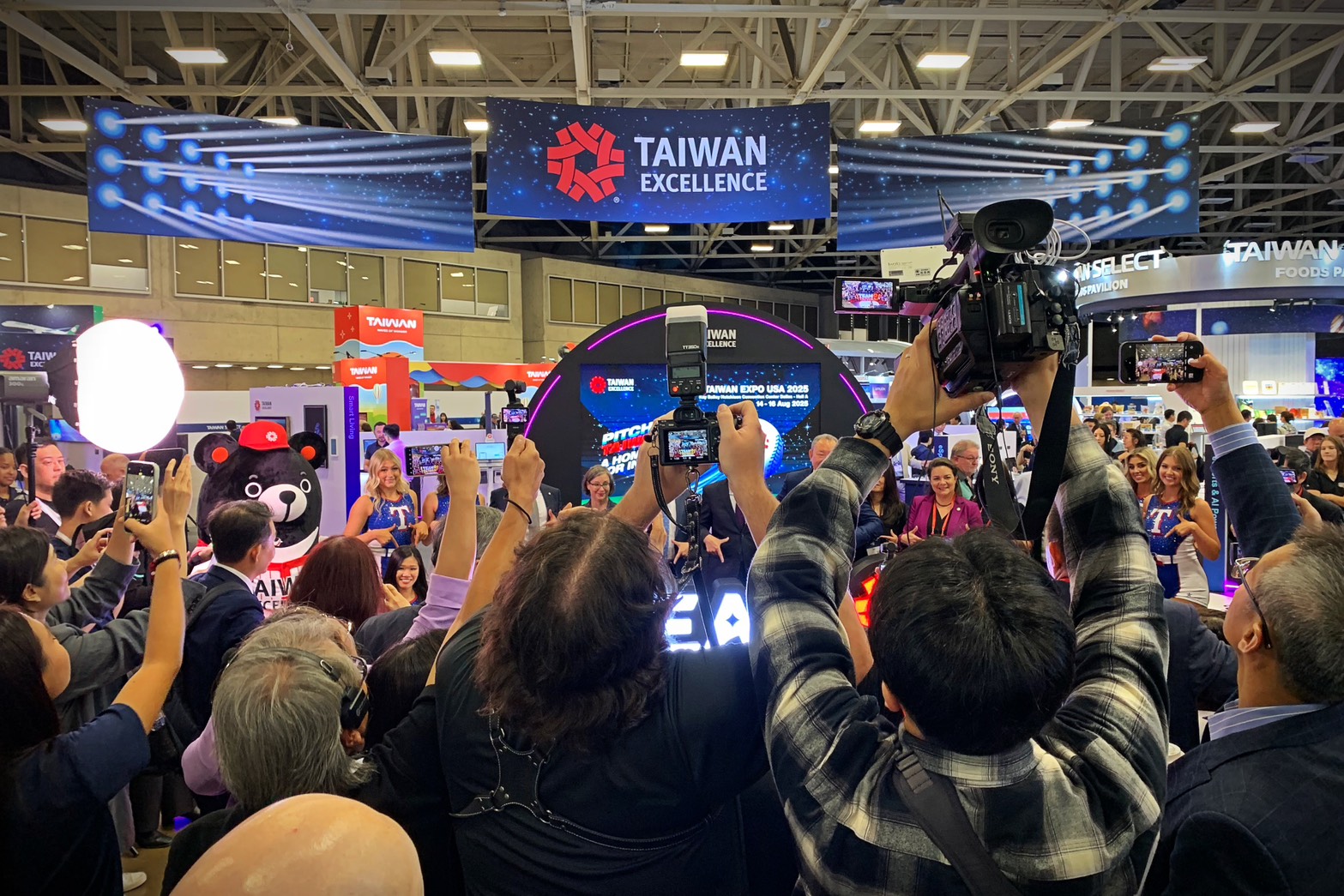
The Texas Rangers Six Shooters and the Texas Rangers Youth Academy joined the pavilion’s opening, creating an event that connected Taiwanese technology with youth development, health and education. Families participated in a custom “Friendship Handshake,” turning what could have been a conventional technology exhibition into a local community event.
That may sound like a small detail.
Strategically, it is not.
A foreign company can rent exhibition space almost anywhere. Becoming part of a local community is considerably harder.
Taiwan Excellence was testing whether the difference between the two could help create more durable relationships.
From Exhibitor to Participant
The same idea appeared in a different form through a collaboration with Artstillery, a Dallas-based performing arts organization.
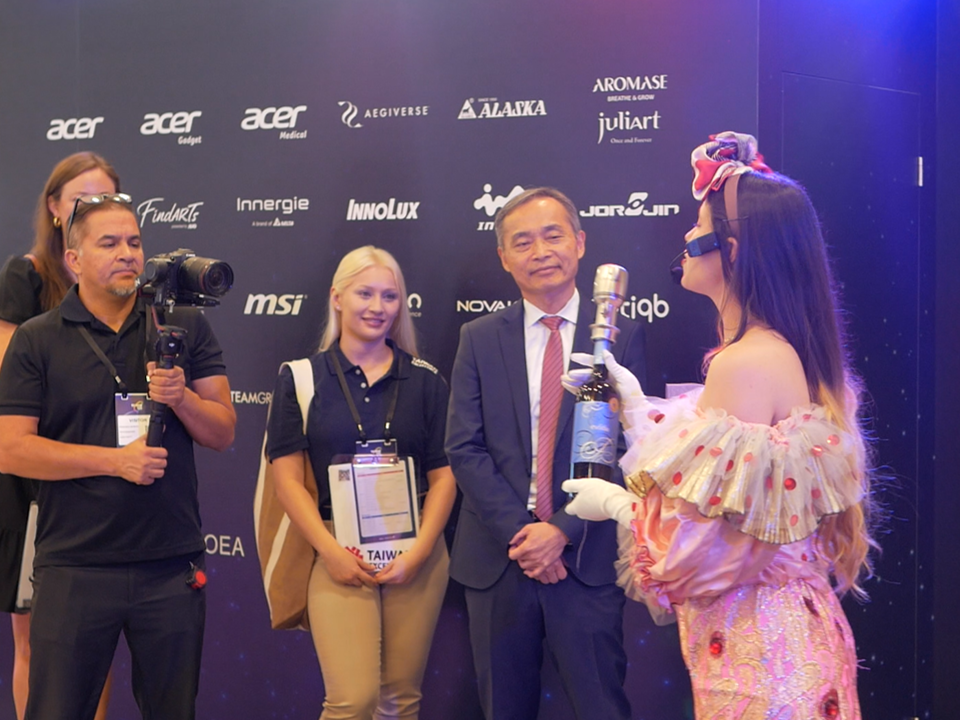
Instead of asking Taiwanese companies to stand beside their products and explain specifications to visitors, Artstillery’s performers turned the products themselves into elements of a theatrical performance.
MSI’s handheld PC became part of a story about portability. Jorjin’s AR glasses were presented through movement and physical theater. Vinxper’s wine aerator and Makalot’s massage belt were introduced through sensory experiences.
Technology was translated into something a Texas audience could see and feel.
The significance was less about the performance itself than about who was doing the interpreting.
Taiwanese products were no longer being explained only by Taiwanese exhibitors. They were being interpreted by people from the local cultural ecosystem.
That changes the relationship.
The message is no longer simply, “Here is what Taiwan has brought to America.”
It becomes, “Here is what this technology means in your world.”
The Supply Chain, Made Visible
Behind the cultural presentation was a much more serious economic proposition.
The pavilion brought together established Taiwanese technology companies and emerging firms whose products are already aligned with sectors that matter to the United States.
Aegiverse, for example, showcased fiber-optic gyroscopes and inertial measurement technology relevant to navigation, aerospace, defense, unmanned systems and electric vehicles. Before the exhibition even opened, the company had attracted inquiries from aerospace companies in Texas and subsequently moved toward discussions involving local aerospace and defense players.
Phison offered another example.
Its Pascari SSD technology has been used in applications associated with the International Space Station and NASA’s Mars exploration missions — a reminder that Taiwan’s technology ecosystem is already embedded in some of America’s most demanding technological environments.
Other companies addressed more immediate challenges in the American economy.
Collaborative robots demonstrated how Taiwanese technology could support the automation of manufacturing. Smart-city and transportation solutions pointed toward increasingly connected infrastructure. AI-enabled health technologies offered potential applications in medical diagnosis and precision health.
Taken together, the products told a story that a catalogue could not.
Taiwan’s competitive advantage is not concentrated in one product or one company. It is an ecosystem capable of supplying technologies across multiple layers of an industrial economy.
That is precisely the story Taiwan Excellence wanted to put on the table.
Why Texas?
The choice of Dallas was not incidental.
Texas has become one of the most consequential states in the American economy, with major technology, aerospace, manufacturing, energy and logistics industries. Its growing industrial base creates opportunities for Taiwanese companies that are looking beyond traditional electronics supply chains.
For Taiwan, the opportunity is particularly important at a time when companies around the world are reconsidering where they manufacture, where they invest and how resilient their supply chains need to be.
Taiwanese companies have long been deeply integrated into global production networks.
The next question is whether more of those relationships can evolve into something deeper: local investment, research and development, procurement, joint innovation and long-term market presence.
The Dallas exhibition was designed with that question in mind.
Alongside the pavilion, the broader Taiwan Expo USA program included business matchmaking and discussions focused on supply-chain cooperation and investment, giving companies a chance to explore what comes after the exhibition floor.
In that sense, the products on display were only the visible layer.
The more consequential objective was to open doors.
The Local Connection
That may explain why Taiwan Excellence invested so heavily in culture and community.
International economic relationships are often described through numbers: exports, investment, orders and supply chains.
But markets are also built through familiarity.
A Texas family interacting with FuBear, a young person participating in a baseball activity, a local artist interpreting a Taiwanese product or a business executive discovering a Taiwanese technology company may seem far removed from an investment decision.
Over time, however, these encounters can create something that a trade mission alone cannot easily manufacture: recognition.
And recognition matters when a company is asking a potential partner to take a risk on an unfamiliar supplier, technology or market.
Taiwan Excellence's Dallas strategy was therefore not simply about bringing Taiwan to Texas.
It was about finding ways for Texas to participate in the Taiwan story.
.jpg)
A Different Kind of Market Entry
The pavilion ultimately suggests a different model for international promotion.
The traditional approach is straightforward: bring products overseas, display them, meet buyers and pursue orders.
Taiwan Excellence added another layer.
It combined business with culture, technology with community, and exhibition with local collaboration.
The result was a form of market entry that sought to establish Taiwan on several levels at once — as a technology partner, a business partner and a participant in local life.
The scale of the broader Taiwan Expo USA 2025 reflected the ambition. About 10,000 people attended the exhibition, which generated an estimated $96 million in business opportunities. The event brought together 150 Taiwanese companies, nearly 30 percent of them publicly listed or OTC companies, making the exhibition considerably larger than Taiwan’s 2022 edition in Washington, D.C.
Those numbers are significant.
But the more important question is what happens after the exhibition closes.
If a Taiwanese aerospace component maker continues discussions with a Texas defense company, if an AI medical technology moves toward clinical cooperation, if a manufacturer finds a local partner or if a consumer product gains a foothold in the American market, then the exhibition has accomplished something beyond exposure.
It has created a connection that can continue without the exhibition.
From “Made in Taiwan” to “Built With Taiwan”
That may be the larger shift Taiwan Excellence is pursuing.
Taiwan’s economic success was built in large part on its ability to manufacture for the world.
The next stage may depend on its ability to build relationships with the world.
In Dallas, Taiwan Excellence presented Taiwanese technology as something that can be integrated into American industries, communities and innovation networks — not simply purchased from abroad.
The baseball metaphor offered the perfect shorthand.
A good pitch is not only about throwing the ball.
It is about knowing the field, understanding the team and creating the conditions for the next play.
Taiwan Excellence came to Texas to showcase what Taiwan can make.
Its more ambitious message was about what Taiwan and America can build together.
Previous article
2025-09-04
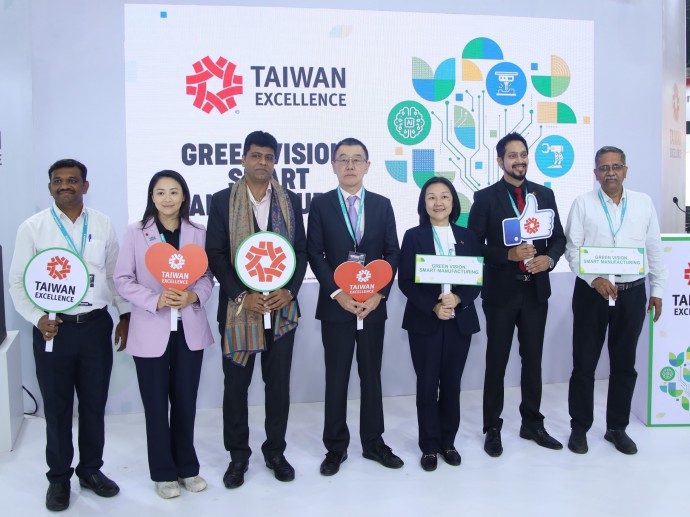
Taiwan Excellence Unveils Smart Manufacturing Breakthroughs at Automation Expo India 2025
Next article
2025-08-10